
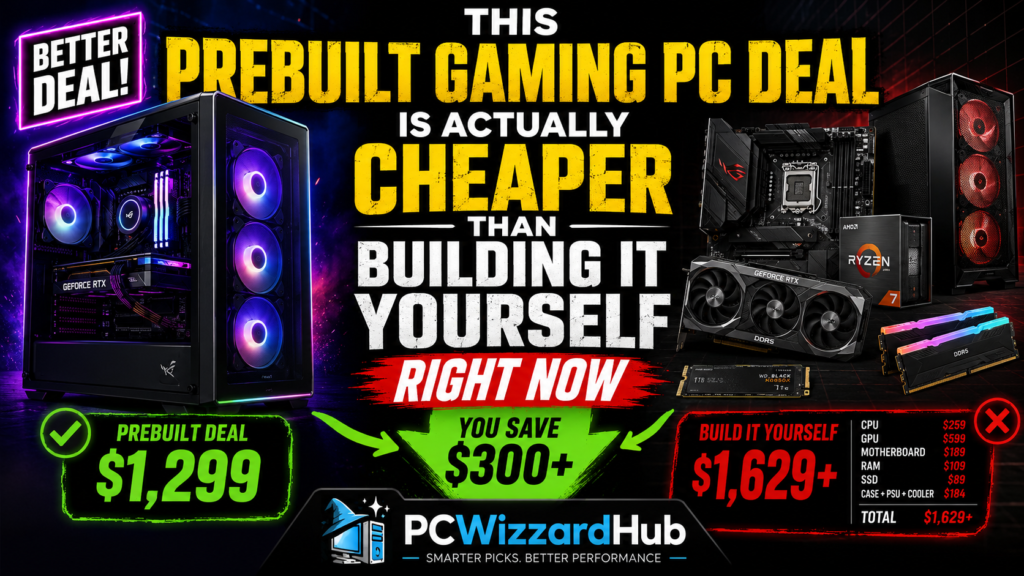
For as long as most of us have been building PCs, the advice has been consistent: DIY always beats prebuilt on price, full stop. That advice just broke. A live deal on the iBuyPower Element SE — Ryzen 7 8700F, RX 7700 XT, 32GB RAM, 1TB SSD, for $1,249 — currently costs meaningfully less than sourcing the same spec yourself. Here’s the real math, and why it happened.
⚡ Quick Answer
- The deal: iBuyPower Element SE (Ryzen 7 8700F, RX 7700 XT, 32GB RAM, 1TB SSD) for $1,249, 31% off its $1,799 list price at Walmart
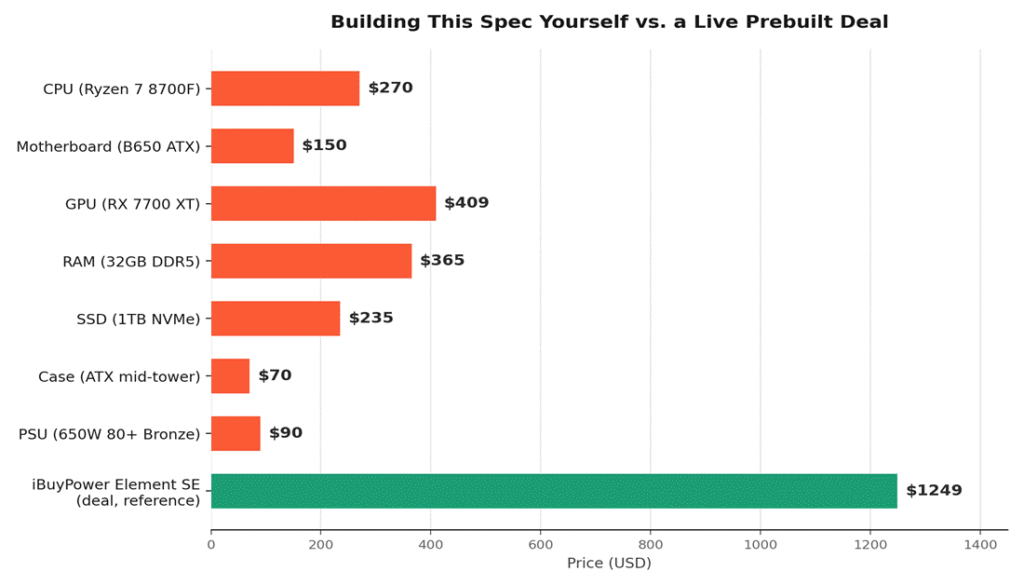
- The DIY equivalent: sourcing the same core specs individually currently costs around $1,589 — roughly $340 more
- Why: RAM and GPU prices have both surged in 2026’s memory shortage. Large system builders often lock in bulk component pricing ahead of these spikes; individual buyers pay today’s spot prices.
- Does this apply to every prebuilt? No — this is specific to this deal, at this moment. Always run the math yourself before assuming either direction.
📊 The Real Cost Breakdown
| Part | Pick | Price |
| CPU | 🛒 AMD Ryzen 7 8700F | ~$270 |
| Motherboard | 🛒 MSI PRO B650-P WiFi | ~$150 |
| GPU | 🛒 Gigabyte RX 7700 XT Gaming OC 12G | ~$409 |
| RAM | 🛒 Corsair Vengeance 32GB DDR5 | ~$350–380 |
| SSD | 🛒 Samsung 990 Pro 1TB | ~$220–250 |
| Case | Generic ATX mid-tower (estimate) | ~$70 |
| PSU | 650W 80+ Bronze (estimate) | ~$90 |
Prices fluctuate with Amazon deals and ongoing memory/GPU price volatility — check live listings before buying. Case and PSU are rough market estimates, not tied to a specific linked listing.
🧭 Why This Happened
This isn’t a fluke specific to iBuyPower. Large system builders purchase RAM, GPUs, and other components in bulk, often through supply agreements negotiated before a price spike fully hits spot markets. When DRAM contract prices jump 90%+ in a single quarter, as they have during 2026’s AI-driven memory shortage, a builder who locked in pricing weeks or months ago can sell a finished system for less than an individual buyer can source the same parts today.
The RAM line item alone tells the story: a 32GB DDR5 kit that cost $100–200 in October 2025 is now running $350+ at retail. That single component shift is most of the gap between this deal and the DIY total.
✅ When Prebuilt Deals Are Worth Taking Seriously
- The advertised discount is real and recent — check price history tools (camelcamelcamel, PCPartPicker) to confirm it’s not an inflated “was” price
- You’d buy the same core components anyway — the comparison only holds if the prebuilt’s specific CPU/GPU/RAM combo matches what you’d actually choose
- You don’t have a strong preference for specific brands/models — prebuilts bundle whatever the manufacturer sourced, not necessarily your first choice of case or PSU brand
⚠️ When DIY Still Wins Despite This
- You already own some components — reusing an existing case, PSU, or SSD immediately changes the math in DIY’s favor
- You want specific parts the prebuilt doesn’t include — a particular case aesthetic, a quieter cooler, or a different GPU brand
- You value the build process and upgrade knowledge itself — that’s a legitimate reason to DIY even at a price premium
❓ Frequently Asked Questions
Is this true for all prebuilt PCs, or just this specific deal?
Just this specific deal, at this specific moment. Prebuilt pricing varies enormously by retailer, sale timing, and specific configuration — always run the actual component math before assuming either DIY or prebuilt wins. This deal happens to land favorably because of the current RAM/GPU price spike combined with a genuinely large discount.
Are prebuilt PCs harder to upgrade later than something I build myself?
Sometimes, depending on the manufacturer — some prebuilts use standard ATX components you can freely upgrade, while others use proprietary power supplies or motherboards that limit future options. Check the specific model’s component list before assuming full upgrade flexibility.
Will building it myself get cheaper again once the RAM shortage eases?
Likely yes, since the RAM line item is the single biggest driver of the current gap. Multiple analysts expect the memory shortage to persist into at least 2027, so don’t count on this reversing quickly — but the traditional DIY cost advantage should return once memory pricing normalizes.
Does this deal come with a good warranty compared to individually purchased parts?
Prebuilt systems typically include a system-level warranty (often 1 year) covering the whole PC, versus individual component warranties (often 2–5 years per part) when you buy separately. Check the specific terms before deciding — this is a real tradeoff, not just a price question.
🔗 Related Reading
- Why RAM and SSD Prices Are Skyrocketing in 2026 (And What Budget PC Builders Should Actually Do)
- Best Gaming PC Build Under $1000 in 2026 (AMD Focused)
⚔️ Final Verdict
Check the actual numbers before assuming DIY automatically wins right now — that assumption has been reliable for years, but 2026’s memory pricing has genuinely flipped it in specific cases like this one. If a prebuilt deal’s exact spec matches what you’d build anyway and the discount checks out against price history, it may be the better financial choice for the first time in a long time. That said, this is deal- and moment-specific, not a permanent shift — verify the math yourself every time rather than treating this as a standing rule.
Note: pricing in this article reflects a specific deal and market conditions as of early August 2026. Both prebuilt deals and component prices move quickly — verify current prices before making a purchasing decision.