

On July 31, 2026, Gigabyte launched a brand new line of AM4 motherboards — for a socket AMD introduced a decade ago and moved on from back in 2022. That alone tells you how severe the memory crisis has gotten. But there’s a twist that changes the advice we and others have been giving: DDR4, the whole reason to consider these boards, is no longer the price-stable safe haven it was even a month ago.
Here’s what Gigabyte actually launched, why now, and an honest update on the DDR4 math.
⚡ Quick Answer
- What launched: Gigabyte’s B550 X Series — new AM4 motherboards with Wi-Fi 7 and modern power delivery, explicitly built around the Ryzen 7 5800X3D
- Why: AMD’s 5800X3D re-release created fresh demand for AM4 boards with modern connectivity, without forcing a jump to pricier DDR5 platforms
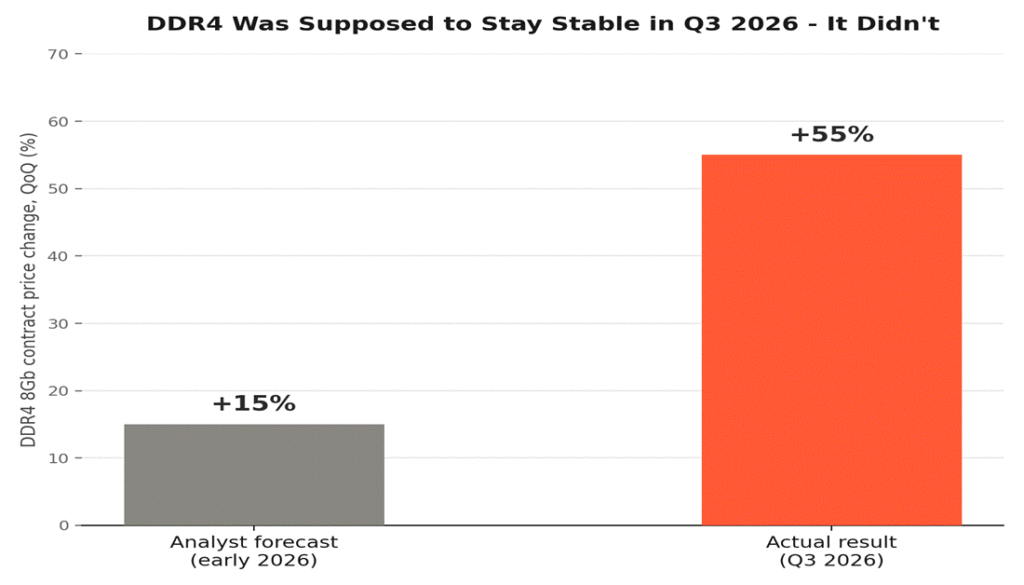
- The catch: a supply-chain report shows DDR4 8Gb contract prices climbing more than 50% in Q3 2026 — far beyond the 10–20% analysts had forecast — with some DDR4 16Gb spot prices now trading above equivalent DDR5
- What this changes: the DDR4 cost advantage we’ve highlighted in earlier coverage only holds if you already own DDR4 RAM. Buying it fresh right now may no longer save you anything.
📊 What Gigabyte Actually Launched
The B550 X Series includes Gaming, Eagle, and AORUS Elite models across ATX and Micro-ATX form factors, with a 10-phase, 60A DrMOS power design and Wi-Fi 7 connectivity — genuinely modern features on a chipset that debuted alongside the AM4 platform’s later years. Gigabyte’s own marketing is unusually direct about the target: the boards are built as “the perfect match” for the Ryzen 7 5800X3D, which Gigabyte calls “widely regarded as the best cost-to-performance processor on the market.”
This follows a B550 AORUS Elite WiFi7 board Gigabyte shipped earlier in July — the B550 X Series reads as a continuation of that push rather than a one-off experiment.
🧭 Why Now: The 5800X3D Created New AM4 Demand
This isn’t nostalgia marketing. AMD’s 🛒 Ryzen 7 5800X3D 10th Anniversary Edition re-release earlier this year created a real gap: plenty of buyers want that chip’s gaming performance and DDR4 pricing, but their existing AM4 boards lack modern connectivity like Wi-Fi 7. Gigabyte is filling that specific gap rather than trying to convince anyone AM4 is a forward-looking platform choice — multiple outlets covering the launch were careful to note this doesn’t make AM4 a platform for the future; new CPU generations and DDR5 remain firmly on AM5.
🚨 The Important Update: DDR4 Prices Are Spiking Too
Here’s where the story gets more complicated than a simple “go DDR4, save money” recommendation. A DigiTimes supply-chain report from early July — widely picked up since — found DDR4 8Gb contract prices climbing more than 50% in Q3 2026, well past the 10–20% increase analysts had been forecasting. In some cases, DDR4 16Gb spot prices are now trading above equivalent DDR5 parts.
The mechanism is scarcity, not obsolescence: Samsung, SK Hynix, and Micron have largely walked away from DDR4 production to chase HBM and DDR5 margins from AI customers, leaving smaller manufacturers like Nanya and Winbond to cover a demand curve they were never sized for. DDR4 isn’t cheap because it’s old and unwanted — it’s becoming expensive because almost nobody big is making it anymore.
💰 So Does a New AM4 Board Still Make Sense?
The honest answer narrows considerably depending on what you already own:
- You already own a DDR4 kit and a 5800X3D (or plan to buy the CPU only): Yes — a modern board with Wi-Fi 7 removes a real limitation without touching the DDR5 market at all. This is the scenario Gigabyte is actually targeting.
- You’re buying RAM from scratch alongside a new board and CPU: The platform savings largely evaporate. Price out current DDR4 kits against equivalent DDR5 kits before assuming AM4 is cheaper — that assumption is far less reliable than it was even a month ago.
- You’re choosing between AM4 and AM5 for a build from zero: Run the actual current numbers on both. The old rule of thumb (“AM4 is always cheaper because DDR4 is cheap”) no longer holds reliably given this pricing shift.
❓ Frequently Asked Questions
Is this the same B550 chipset as older boards, or something new?
Same chipset — still B550, still DDR4, still PCIe 4.0. Gigabyte modernized the power delivery, connectivity (Wi-Fi 7), and I/O rather than changing the underlying chipset generation.
Why would DDR4 prices spike if manufacturers are abandoning it — shouldn’t demand also be falling?
Demand for DDR4 has actually held up better than expected, largely because of the 5800X3D’s popularity and existing AM4 systems that need memory. Falling supply combined with steadier-than-expected demand is exactly the combination that produces a price spike, rather than the gradual decline you’d expect from a simple end-of-life product.
Should I still buy the 5800X3D if DDR4 isn’t cheap anymore?
If you already own DDR4 RAM, absolutely — that part of the equation hasn’t changed. If you’d need to buy DDR4 from scratch, run the numbers against an AM5 alternative before assuming AM4 wins on cost; it may not anymore.
Will Gigabyte’s new boards themselves be expensive given the memory crisis?
Gigabyte hasn’t disclosed pricing or release dates for the full B550 X lineup as of this writing. Given broader component cost pressures covered in our other coverage, it would be reasonable to expect these boards to carry some of that same cost pressure, though motherboard PCB costs are a separate issue from DRAM pricing specifically.
🔗 Related Reading
- Why RAM and SSD Prices Are Skyrocketing in 2026 (And What Budget PC Builders Should Actually Do)
- Best AM4 Budget Motherboards in 2026
⚔️ Final Verdict
Gigabyte’s new AM4 boards are a genuine, well-targeted product for a real group of buyers — people who already have DDR4 memory and want to pair it with the 5800X3D on modern connectivity. What’s changed is that the broader “just go DDR4, it’s cheaper” advice needs an asterisk now. If you’re not already sitting on DDR4 RAM, verify current pricing before assuming that platform still wins on cost — this is a fast-moving situation, and the safe assumption from a month ago may not hold today.
Note: pricing and market conditions in this article reflect early August 2026 reporting. DDR4 and DDR5 pricing are both moving quickly right now — verify current prices before making a purchasing decision, and we’ll revisit this article as the market shifts.