

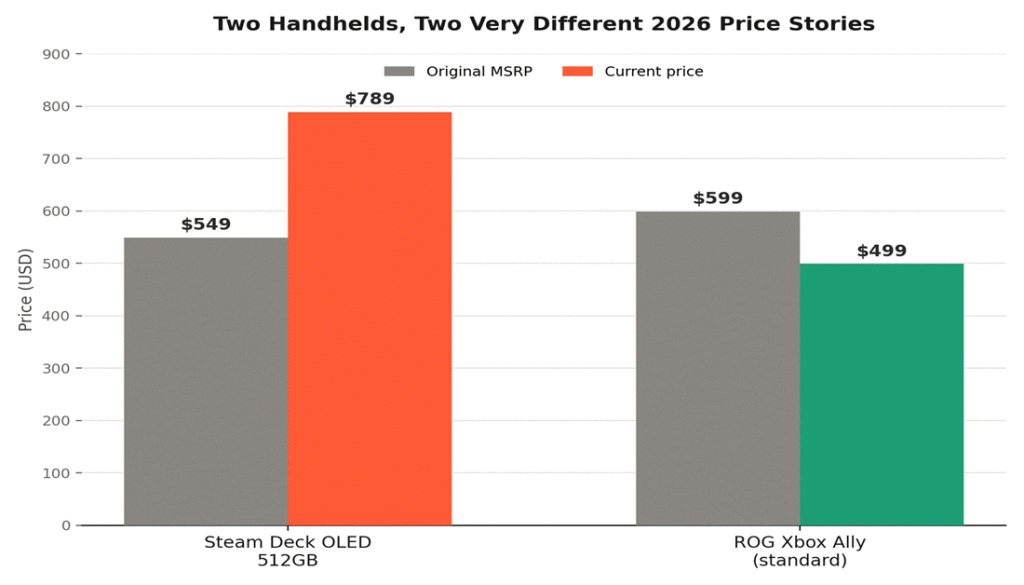
Valve raised Steam Deck OLED prices by up to $300 in May 2026, pushing the 512GB model from $549 to $789. That’s a 44% increase on a two-year-old device with zero hardware changes. But while the Deck got dramatically more expensive, a genuine competitor — the ASUS ROG Xbox Ally — has actually gotten cheaper, currently sitting around $499. And it happens to sidestep the exact limitation that keeps SteamOS devices from running some of the most popular competitive games.
Here’s the real breakdown of both price stories, and which handheld actually makes sense right now.
⚡ Quick Answer
- Steam Deck OLED: 512GB jumped from $549 to $789 (+44%), 1TB jumped from $649 to $949 (+46%), effective May 27, 2026 — no hardware changed, only price
- ROG Xbox Ally: the standard model has fallen from its $599 MSRP to around $499 in recent months — moving the opposite direction of nearly every other gaming device in 2026
- The real differentiator: the ROG Ally runs Windows 11 natively, so it doesn’t hit the kernel-level anti-cheat wall that blocks Valorant, Call of Duty, Battlefield 6, and EA Sports titles on SteamOS devices
- Bottom line: if competitive anti-cheat games matter to you at all, the cheaper option is now also the more capable one
📊 Two Handhelds, Two Opposite Price Stories
🔥 Why the Steam Deck Got So Much More Expensive
Valve’s official explanation was brief: “these new prices reflect the current state of component costs and other global logistical challenges across the industry as a whole.” That’s industry-standard phrasing for the same DRAM and NAND flash shortage covered in our RAM/SSD pricing breakdown — AI data centers have been absorbing memory supply that used to go into consumer devices, and the Steam Deck OLED’s less-common 2230-format NVMe storage may make sourcing even more expensive than standard components.
This isn’t a Valve-specific decision. Sony raised the PS5 to $649.99 (Pro to $899.99), Microsoft pushed the Xbox Series X to $649, and Nintendo has confirmed a $50 increase for the Switch 2 arriving in September 2026. Nearly every gaming hardware maker is passing the same memory cost surge on to consumers — Valve’s increase is simply one of the largest in percentage terms.
✅ Why the ROG Ally Is Moving the Opposite Direction
The standard 🛒 ASUS ROG Xbox Ally launched at a $599 MSRP and has been repeatedly discounted since, with Amazon and Best Buy both running it down to roughly $499–540 across recent promotions, and deeper regional deals dipping further still. Part of this is normal handheld-market competitive pressure — ASUS and Microsoft are trying to build market share against Valve’s device — and part of it may reflect different sourcing choices for RAM and storage that haven’t been hit as hard by the same shortage.
Whatever the cause, the practical result is that the pricing gap between these two devices, which used to favor the Steam Deck, has now reversed entirely.
🎮 The Bigger Deal: Anti-Cheat Compatibility
Price aside, this matters more for a specific group of buyers: SteamOS — whether on a Steam Deck or a DIY SteamOS PC — cannot run games using kernel-level anti-cheat software. That rules out Valorant, League of Legends, the entire Call of Duty franchise, Battlefield 6, and EA Sports titles.
The ROG Ally runs full Windows 11, so none of those games are off-limits. If your regular game library includes any competitive anti-cheat titles, the ROG Ally isn’t just cheaper right now — it’s the only one of the two that can actually run your games.
📊 Spec Comparison
| Spec | Steam Deck OLED (512GB) | ROG Xbox Ally (standard) |
| Current price | $789 | 🛒 ~$499 |
| RAM | 16GB LPDDR5 | 16GB LPDDR5 |
| Storage | 512GB (2230 NVMe) | 512GB NVMe |
| OS | SteamOS (Linux-based) | Windows 11 |
| Anti-cheat game support | No (kernel-level AC blocked) | Yes (native Windows) |
| Display | 7.4″ OLED, 90Hz | 7″ LCD, 120Hz |
Prices fluctuate with ongoing promotions and the broader memory shortage — check current listings before buying.
✅ Who Should Still Get the Steam Deck
- You value the open Linux/SteamOS ecosystem — easier modding, emulation, and community tooling than Windows handhelds typically offer
- You exclusively play games without kernel-level anti-cheat — the vast majority of the Steam library (around 90%) runs fine via Proton
- The OLED screen and battery life matter to you specifically — Valve’s OLED panel remains well-regarded even at the new price
Valve sells the Steam Deck directly through its own store at the official price; the 🛒 listings available on Amazon are third-party marketplace sellers, so double-check pricing against Valve’s own store before assuming Amazon is the better deal.
✅ Who Should Get the ROG Ally Instead
- You play any competitive anti-cheat title — this alone settles it for Valorant, CoD, Battlefield, or EA Sports players
- Budget is the deciding factor — it’s currently the cheaper device by roughly $250–290
- You want to run non-Steam PC software — full Windows means Game Pass, Epic Games Store, Battle.net, and general desktop apps all work natively
❓ Frequently Asked Questions
Will Steam Deck prices come back down?
Not predictably in the near term — the underlying memory shortage driving this increase is expected to persist into at least 2027–2028 according to multiple industry trackers. Valve made no indication this is temporary.
Is the ROG Ally’s lower price a sign of worse quality or hidden downsides?
Not particularly — it’s a legitimate handheld with a strong track record; the price movement reflects competitive positioning and possibly different component sourcing, not a quality cut. Compare current specs directly before buying either device, as ASUS has multiple ROG Ally tiers (standard, X, and Xbox-branded) at different price points.
Can I just install SteamOS on a ROG Ally to get both worlds?
Some ROG Ally owners have installed SteamOS or Bazzite (a SteamOS-like distribution) on their devices, but this sacrifices the native Windows anti-cheat compatibility that’s the ROG Ally’s main advantage right now — you’d be trading away the exact benefit that makes it worth choosing over the Deck.
Are other handhelds also getting cheaper, or is the ROG Ally an outlier?
It appears to be more of an outlier — competitors like the Lenovo Legion Go series have seen price increases alongside most of the market, according to several 2026 handheld pricing roundups. Don’t assume the ROG Ally’s trend applies broadly.
🔗 Related Reading
- Why RAM and SSD Prices Are Skyrocketing in 2026 (And What Budget PC Builders Should Actually Do)
- Best Gaming PC Build Under $1000 in 2026 (AMD Focused)
⚔️ Final Verdict
A year ago, the Steam Deck was the easy budget recommendation and the ROG Ally was the pricier alternative for people who specifically needed Windows compatibility. That calculus has fully reversed in 2026. Unless the open SteamOS ecosystem or the OLED screen specifically matters to you, the ROG Ally is now both the cheaper and the more broadly compatible choice — a genuinely unusual position for either device to be in.
Note: pricing in this article reflects market conditions as of early August 2026. Handheld pricing has moved unusually fast in both directions this year — verify current prices before buying, and we’ll revisit this article as the market shifts.