

If you checked GPU prices in June and are checking again now, the numbers you’re seeing aren’t a glitch. The RTX 5060 Ti 16GB — one of the most popular budget-tier cards on the market — has jumped from a median price of $570 to $805 on Newegg in just two months. The RTX 5070 isn’t far behind, up 36% in the same window. This is a sharp acceleration from the 20-30% increases we covered a week ago, not a one-time correction.
⚡ Quick Answer
- RTX 5060 Ti 16GB: median price up 41% since June 2026, from $570 to $805 on Newegg
- RTX 5070: median price up 36% since June 2026, from $660 to $900
- Higher-end cards: the RTX 5090 has been spotted well above $4,900 in the US, against a $1,999 launch MSRP — more than double
- Why: the same AI-driven memory shortage covered throughout our 2026 coverage, now compounded by TSMC wafer cost increases and Nvidia reportedly cutting its own RTX 50 production 30–40% to redirect memory toward higher-margin products
📊 The Two-Month Jump
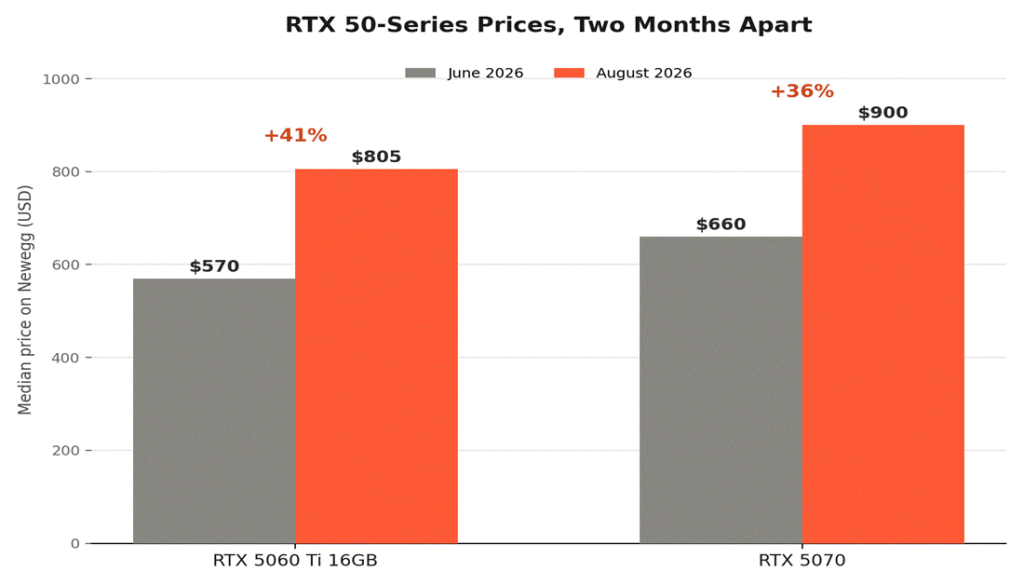
These aren’t cherry-picked numbers from one retailer having a bad week — Tom’s Hardware’s analysis of Newegg median pricing found the 🛒 RTX 5060 Ti 16GB was the single worst-affected card measured, and it’s specifically the model most budget PC builders were relying on. The 8GB variant of the same card rose more modestly, from $469.99 to $529.99, which is itself telling: memory-heavier configurations are absorbing a disproportionate share of the increase, directly tracing back to GDDR7 and DRAM cost pressure rather than the GPU die itself.
🔥 Why This Accelerated So Fast
Three separate pressures are compounding at once. First, the structural AI memory shortage we’ve covered extensively — Samsung, SK Hynix, and Micron continuing to allocate wafer capacity toward high-bandwidth memory for AI datacenters instead of consumer GDDR7. Second, TSMC has reportedly raised prices across its advanced manufacturing nodes, including some previously considered stable older nodes. Third, and less widely discussed: Nvidia has reportedly cut its own RTX 50-series production by as much as 30–40% in the first half of 2026, redirecting that capacity toward higher-margin products — a voluntary supply reduction, not simply a shortage happening to it.
Nvidia’s own CEO acknowledged tight supply on an earnings call earlier this year, warning gaming GPU availability would remain constrained for “a couple of quarters” with limited visibility beyond that — a warning that appears to be playing out.
💰 Should You Buy Now or Wait?
This is a harder call than most of our other 2026 pricing coverage, because the trend here is actively accelerating rather than settling into a predictable pattern. If you need a GPU for a build happening in the next few months, the honest answer is that waiting has not paid off at any point in 2026 so far — every delay this year has meant a higher price, not a lower one. The long-rumored RTX 50 Super refresh, which many buyers were holding out for, has reportedly been delayed repeatedly and is now not expected until CES 2027.
- If you need to buy soon: buy now rather than waiting for a hoped-for correction — nothing in current reporting suggests relief is imminent
- If you have real flexibility: last-generation cards (RTX 40-series, RX 7000-series) may offer meaningfully better value right now than chasing current-gen pricing
- Watch for Founders Edition restocks: Nvidia has occasionally sold RTX 50-series cards at MSRP directly during specific promotional windows, though these sell out within minutes
If you’re specifically weighing whether to buy the 🛒 RTX 5070 now, check the current listing against its recent price history rather than assuming today’s number is either a peak or a floor — this is a genuinely volatile market right now.
❓ Frequently Asked Questions
Is this the same story as the GPU price increases covered a week ago?
Same underlying cause, but meaningfully worse in degree. Our earlier coverage cited a reported 20–30% increase; this fresh Newegg median pricing data shows up to 41% over just the June-to-August window for the worst-affected card. Treat this as an update, not a repeat — the situation has accelerated.
Will AMD cards be a safer bet than Nvidia right now?
Not meaningfully — AMD confirmed its own 10% price increase on Radeon GPU kits effective August 2026, which effectively closes the price gap that used to exist between Radeon and GeForce at equivalent tiers. Both vendors are exposed to the same memory cost pressure.
Is the RTX 5060 Ti 16GB still worth buying at $805, or should I get the 8GB version instead?
The 8GB variant rose far less (to $529.99) and remains the better value if 16GB of VRAM isn’t essential for your specific games or workload. Don’t assume the 16GB card is worth its now much wider price premium without checking whether you actually need the extra memory.
Are these price increases permanent, or will they correct once the memory shortage eases?
Multiple analysts expect the underlying memory shortage to persist into at least 2027, and Nvidia’s own leadership has declined to commit to a timeline for improved supply. Don’t plan around a near-term correction — current pricing is the realistic baseline to budget against, not an anomaly.
🔗 Related Reading
- RTX 4060 vs RX 7600: Which Budget GPU Should You Buy in 2026?
- GPU, Motherboard, and CPU Prices in 2026: What’s Actually Rising (and What Isn’t)
- Why RAM and SSD Prices Are Skyrocketing in 2026 (And What Budget PC Builders Should Actually Do)
⚔️ Final Verdict
The trend we flagged as a concern a week ago has moved faster and further than even that coverage suggested. If a GPU purchase is on your near-term list, this is not a situation where patience has been rewarded at any point in 2026 — every month of waiting has come with a higher price tag attached. Budget accordingly, and don’t assume this settles down soon.
Note: pricing in this article reflects Newegg median pricing data reported by Tom’s Hardware as of early August 2026. GPU prices are moving unusually fast right now — verify current listings before purchasing.